Wasp Season in Utah: What You Need to Know Now
If your pest control company is surprised by wasp season in August, you have the wrong company.
Utah wasp season is predictable. It peaks late August through October every year. Colonies that have been quietly building since spring reach their maximum size — and their maximum aggression — right as temperatures start to cool. This is the combination that sends people inside.
Which Wasps Are Common in Utah
Three species account for most of the calls we get:
- Yellow jackets: The most aggressive Utah wasp. They nest in the ground, in wall voids, and occasionally in established structures. They become highly defensive in fall as colony populations peak. Yellow jackets are responsible for most wasp stings in Utah.
- Paper wasps: Nest under eaves, deck railings, and overhangs in open, umbrella-shaped paper nests. Less aggressive than yellow jackets but will sting if the nest is disturbed. Common across all Utah elevations.
- Bald-faced hornets: A large, black-and-white wasp that builds enclosed gray paper nests — often in shrubs, trees, or on structure overhangs. More aggressive than paper wasps. Their nests can reach basketball size by September.
Canyon-adjacent cities — Draper, Sandy, American Fork, Pleasant Grove, Cottonwood Heights — see higher pressure from multiple species due to the foothills habitat adjacent to these communities.
Why Early Treatment Timing Matters
In spring and early summer, wasp colonies are small. A nest in May might have 20–30 workers. The same nest in September might have 500–1,500. Treating a small colony is straightforward. Treating a full-size September colony near a structure is a different project.
Early Summer treatment — before colonies reach maximum size — is the most effective window. It’s also when wasps are the least aggressive, which makes treatment safer. Waiting until the first sting means waiting until the colony is at its most difficult to manage.
Ground Nests: The Most Dangerous Wasp Problem
Yellow jacket ground nests are particularly dangerous because they’re often discovered accidentally — by a lawnmower, a foot, a dog. The colony responds immediately and aggressively. Properties adjacent to open space, parks, or canyon corridors are at highest risk.
If you know you have a ground nest, do not attempt to treat it yourself after dark with a consumer product. The results are rarely good. This is one of the few situations where professional treatment is genuinely the right call from a safety standpoint.
What Our Pest Program Does for Wasp Season
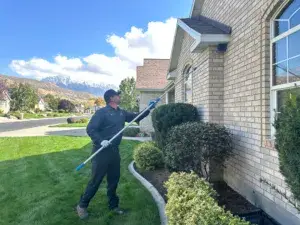
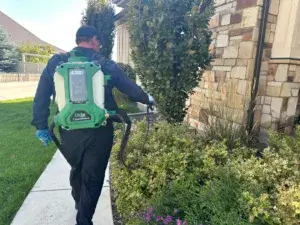
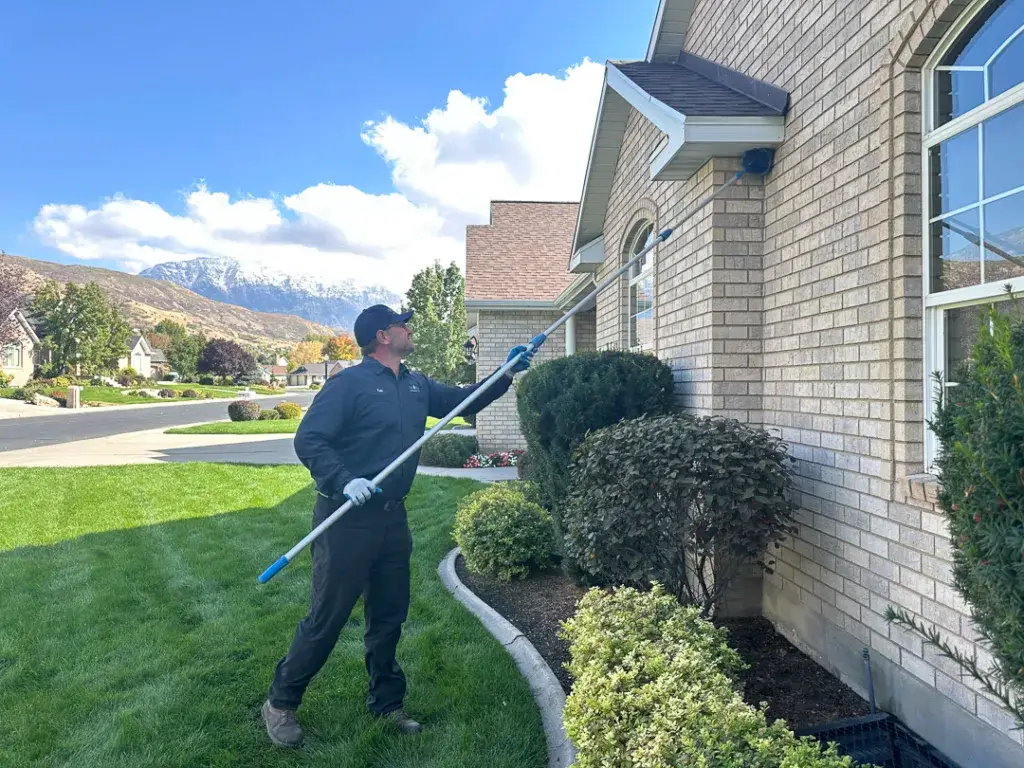
Our quarterly pest service includes proactive perimeter treatment in July and August specifically timed to wasp season. We treat eave lines, window frames, deck undersides, and other common nesting initiation points before colonies establish. Active nests discovered during treatment are addressed directly.
For properties in Saratoga Springs, South Jordan’s Daybreak, or any lake-adjacent community: mosquito and wasp pressure from the natural environment around you is real. The goal isn’t to eliminate every wasp from the surrounding ecosystem. The goal is to make your yard significantly less hospitable than your untreated neighbor’s yard. The program does that reliably.
Wasp problems? Active nests? Call. We’re not surprised by August. We planned for it.