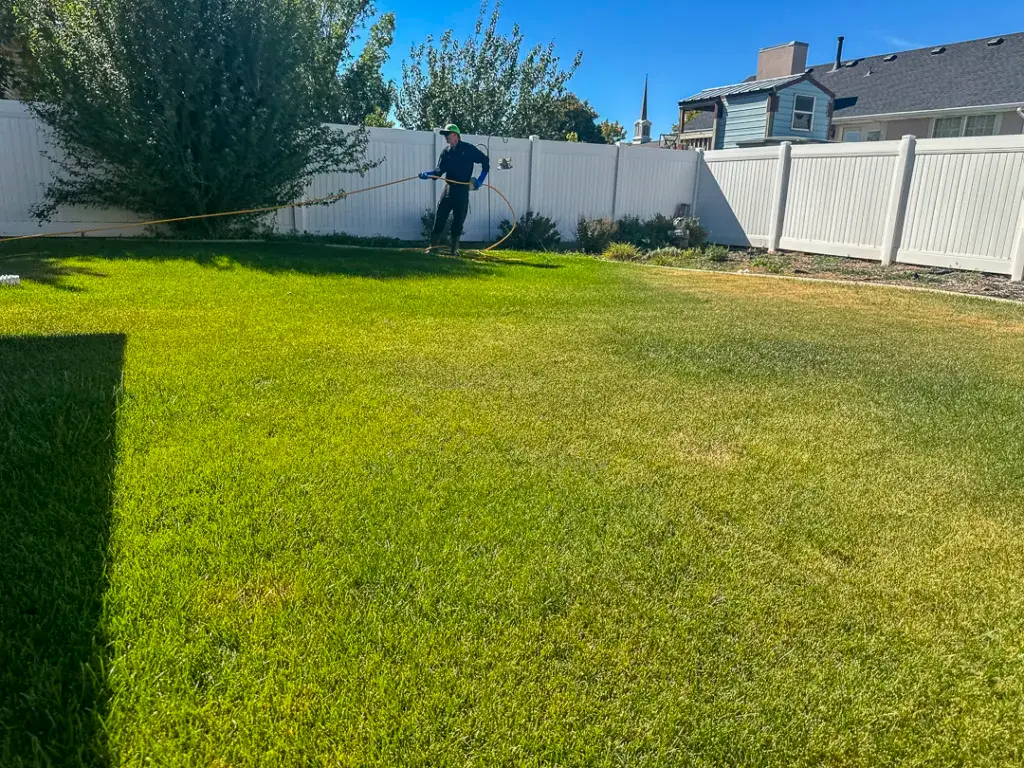
Why Is My Utah Lawn Yellow in Spring?
Every spring, we get this call: “My lawn is yellow. Did it die over winter?” Usually the answer is no. Sometimes the answer is complicated. Here’s how to tell the difference.
Normal Dormancy Discoloration
Kentucky bluegrass — the dominant grass in Utah — goes dormant in winter. Dormant grass is straw-colored to yellow-brown. It’s not dead. It’s conserving energy through cold and dry conditions. As soil warms in spring, the lawn will green up from the roots — and the speed of that green-up depends heavily on whether the lawn received a winterizer (Round 5) treatment in fall.
Lawns that received a proper fall fertilization green up noticeably faster than lawns that went into winter without it. If your neighbor’s lawn was green two weeks before yours, the winterizer is usually why.
Necrotic Ring Spot — The Most Misdiagnosed Utah Lawn Problem
Necrotic ring spot is a soil-borne fungal disease that appears as ring-shaped or arc-shaped brown or yellow patches, often with green grass in the center of the ring (the classic “frog-eye” pattern). It’s extremely common in Utah and almost always misdiagnosed as drought stress or fertilizer burn.
The fungus lives in the soil and attacks roots and crowns. Symptoms are most visible in late spring and early fall when temperatures are between 55–65°F. During summer heat, the visible symptoms often temporarily fade — which further confuses diagnosis.
Honest truth about necrotic ring spot: it takes two seasons of consistent treatment to meaningfully reduce it. Any company promising a one-season fix isn’t being straight with you. A professional diagnosis, appropriate fungicide program, and consistent lawn fertilization are the treatment plan. There’s no shortcut.
Iron Chlorosis — High pH Utah Soil Problem
Utah soil tends toward alkaline pH levels — often above 7.5 in clay-heavy areas. High pH reduces iron availability to grass plants even when iron is physically present in the soil. The result is yellowing (chlorosis) that appears throughout the lawn or in patches, typically with green veins visible in the blade.
Treatment: iron supplementation applied in a form the grass can actually absorb at high pH. This is a separate treatment from standard fertilization and is something to address during warm-season applications.
Vole Damage
If you’re seeing matted-down yellow or brown pathways — narrow runs about 1–2 inches wide — especially under snow areas, that’s vole damage, not a lawn disease. Voles tunnel under snow through the winter, girdling grass crowns and exposing root systems.
The good news: most Utah lawns recover from vole damage with warmth and consistent fertilization. The bad news: they’ll do the same thing next winter without perimeter treatment in fall.
What to Do If Your Lawn Is Yellow in Spring
First: wait two weeks. A lawn that looks yellow or patchy in early April often looks dramatically different by early May. Dormancy break is not uniform, and cold soil temperatures slow green-up across the board.
After two weeks: look at the pattern. Uniform slow green-up is normal dormancy. Ring-shaped patterns suggest necrotic ring spot. Narrow runs or matted paths suggest vole damage. Uniform yellowing with green leaf veins suggests iron chlorosis.
If you’re unsure, call us. We’ll look at it.